The Shift From Doer to Leader
You used to be measured by what you produced. Now you’re measured by who you grow.

Stepping out of the doer role
For years, you were good because of what you could do. You knew the work, you moved fast, and people counted on you to get it done.
Then you got the role. Overnight, the thing that made you successful stopped being your job.
Nobody tells you how strange that feels. You’re still close enough to the work to see every mistake. You’re not yet sure how to manage the operation, and you’re learning to lead people at the same time. Some days you’re doing all three at once and none of them well.
That’s normal. The shift isn’t a promotion you receive. It’s a change you make, in how you think and in what you do every day.

Your product changes
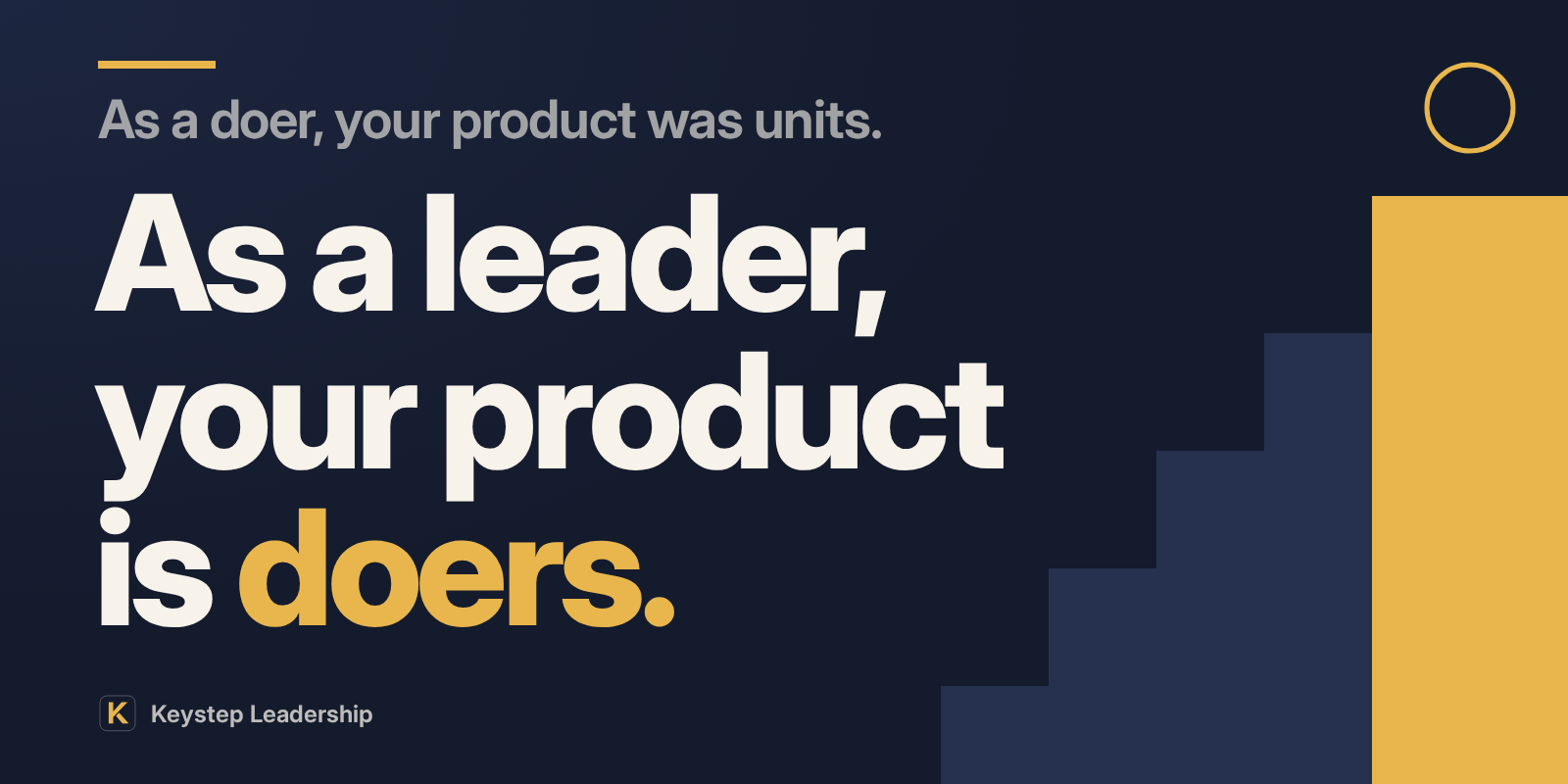
As a doer, your product was units. Tasks finished, problems solved, work shipped. You could count your day.
As a leader, your product is doers. It’s the people around you, and how much better they get because you’re there.
Andy Grove made the same point in High Output Management: a manager’s output is the output of the teams they lead and influence. Their wins are your work now.
That raises the real question of the role. How do you produce great doers? Not by accident. Doers are grown by a few simple systems that set clear expectations, give people what they need, and keep developing them week after week. Those systems get their own article, The Systems That Build Strong Teams.
What a leader does differently
Systems give you the structure. Your actions fill it. Here’s what changes day to day.
You delegate for reps, not relief. The goal isn’t to clear your plate. It’s to give someone the practice they need to grow. Hand off the work you’d be fastest at, because that’s where they’ll learn the most.
You coach, and you make time for it. When someone brings you a problem, your old instinct is to solve it. Ask a question instead. “What have you tried?” teaches more than any answer you could give. A standing one-on-one is where that coaching happens. It’s where you hear what’s getting in the way, what someone wants to learn next, and where they’re ready to grow. For tools and frameworks that help you do both well, see The Systems That Build Strong Teams.
You build a team that solves problems in your area. Your goal is a team that can handle the hard days without you in the middle. Every problem they solve on their own is proof the system is working.
Picture a team lead who used to fix every customer issue herself. She starts asking one teammate to take the first call and bring her a plan. A month later, that teammate is handling issues she used to escalate. The lead didn’t work harder. She built a doer.

Making the shift stick
Knowing what to do isn’t the hard part. Doing it when the old habits feel safer is. Notice when you slip back into doing the work yourself. Remind yourself that your job now is to grow your people. Then commit to that choice again and again, until it’s who you are. That’s the ABCs at work: Awareness, Belief and Commitment. For the full breakdown, start with The ABCs of Leadership.
Do that, and something changes. You stop measuring your day by what you finished. You start measuring it by who got better. You’re no longer producing units. You’re producing doers.
Take the Keystep
The keystep is the most important step you can take, because it’s the next one.
Think of one person on your team you’d love to see grow. Write their name at the top of a page.
Underneath, write three things:
- The work they own today.
- What they do really well.
- One thing they could do next that would stretch them.
That’s it. You just did what great leaders do. You looked at someone and saw who they could become.
Now picture giving them everything they need to get there: a clear picture of what they own, the know-how to do it well, a plan for that next skill, and a regular time to talk about their growth. That’s exactly what The Systems That Build Strong Teams is built for. It gives you ready-made tools for each one, so you can start growing them this week without building anything from scratch.
Unlock your potential. Become a Keystep leader.
Get the next keystep in your inbox
New articles and practical tools for new leaders, plus first access when tools launch.
No spam. Unsubscribe anytime. See the privacy policy.
Keep going
- Managing Versus Leading, for why running the work and growing the people are two different jobs.
- The ABCs of Leadership, for the three basics behind every shift you make.
- Building Trust, for the foundation every handoff is built on.
- What It Means to Be a Leader, for the one test that proves your product is now doers.
Sources
- Andrew S. Grove, High Output Management, on a manager’s output being the output of the teams they lead and influence (paraphrased).